Logs are sold in bags of every size and name: bulk bags, dumpy bags, builders' bags, barrow bags, nets and loose loads. They're not the same amount of wood, and there's no legal standard for a "bag of logs". Here's how to compare them properly.
What each one holds
- Loose load: sold by the cubic metre and tipped where you want it. A loose cubic metre is a genuine cubic metre of wood with the air gaps from tipping.
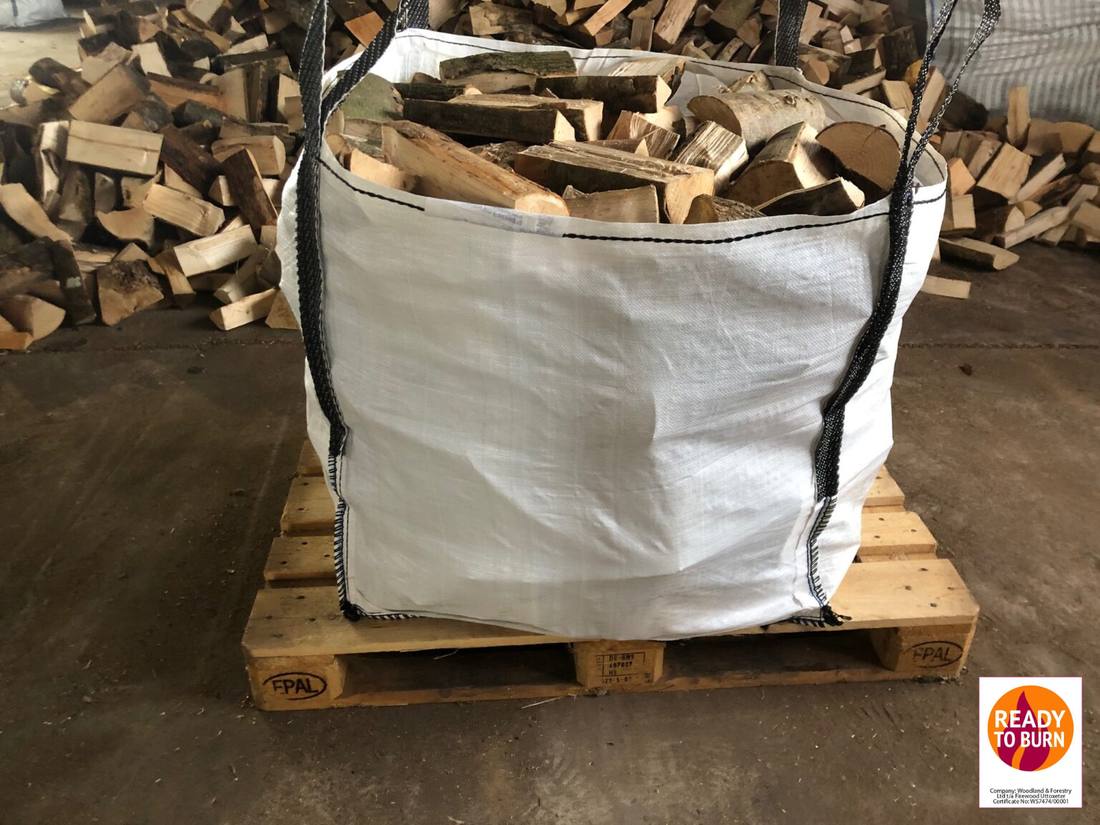
- Bulk bag (dumpy bag): our kiln dried bulk bag holds half a cubic metre.
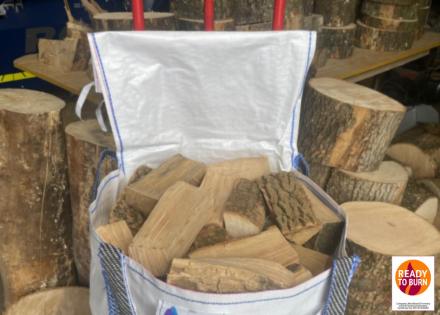
- Barrow bag: a movable bag about the size of a wheelie bin, around a fifth of a cubic metre. Our barrow bag is made for tight access and topping up.
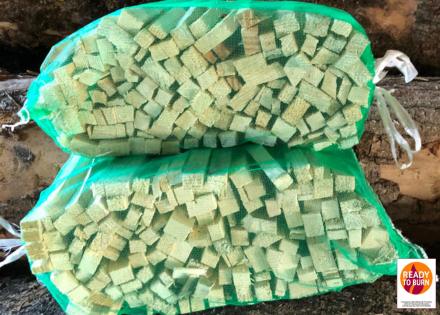
- Nets: handy for kindling, but expensive per log for firewood.
Which is better value?
Per log, the loose load wins. Two of our bulk bags hold the same wood as one loose cubic metre, and the loose load costs less. Bags make sense when you're short of storage, when the trailer can't reach where the wood needs to go, or when you only light the fire now and then.
Always compare on volume
Plenty of what gets sold as a "bulk bag" or "dumpy bag" is nothing like half a cubic metre. Check the stated volume, not the photo, and check the moisture too: wet wood in a big bag is still poor value, because much of what you're paying for is water.
How many logs is that?
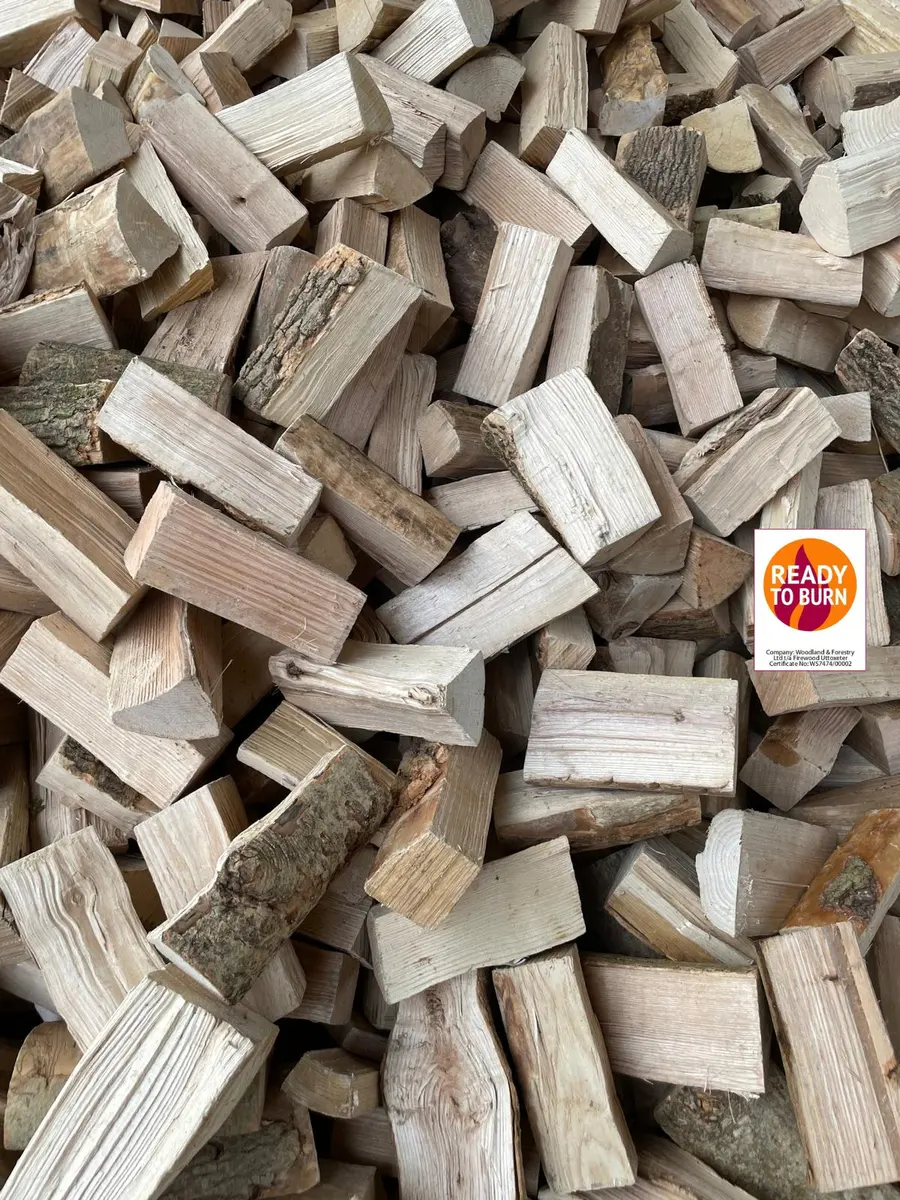
As a guide, a cubic metre holds around 360 to 380 standard 9 inch logs, about 120 chunky logs or 460 to 480 short logs. A stove lit a few nights a week typically uses 1.5 to 3 cubic metres from October to March.
So which should you buy?
- Room for a log store and a stove lit most evenings: a loose load of kiln dried logs.
- Small space, a garage or awkward access: bulk bags.
- Topping up, a terrace with no drive or an occasional fire: a barrow bag.
Not sure how much you need? Our calculator works it out and suggests the load that fits your storage. We deliver all of these across Staffordshire and Derbyshire from Uttoxeter: see our delivery areas.